Overview of Budget Plans – Ministry of Economy and Labour
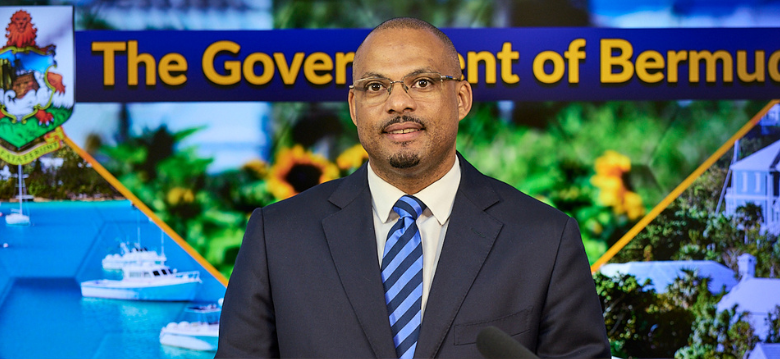
Good day to all Members of the media and the listening public.
The Ministry of Economy and Labour plays a central role in shaping the future well-being of our country. Over the past twelve months, we have strengthened systems, advanced reforms, and focused deliberately on execution. I am proud of the progress we have made.
The latest annual GDP figures from the Department of Statistics are for 2024, and they show that the economy grew for a fourth consecutive year, expanding by 1.9 per cent. That growth reflects the progress we’ve made as a country.
Even with global uncertainty, employment grew for a fourth year, core indicators remained stable, and incomes continued to improve.
More recently, the third quarter results released by the Department of Statistics underline that momentum. In the third quarter of 2025, the economy grew by 9.9 per cent in real terms, the strongest quarterly performance since 2021.
Taken together, these results show an economy that is not only growing but strengthening. However, our work is not finished.
There is more to do to ensure that Bermuda remains competitive, that opportunity expands for our people, and that economic growth translates into lasting benefits for Bermudians.
Today, I am pleased to present the 2026/27 Budget overview for the Ministry of Economy and Labour under the theme, Responsible Choices… Lasting Benefits for Bermudians.
This Budget reflects discipline, execution, and measurable progress. It strengthens Bermuda’s economic foundations while investing in the systems that drive long-term competitiveness, workforce resilience, and regulatory integrity.
Our mandate remains clear. We are building a modern, competitive economy that creates opportunity for Bermudians, supports business growth and protects the stability of our labour market.
This year’s Budget advances that mandate across six strategic pillars:
- Investment attraction and economic diversification;
- Local business growth and entrepreneurship;
- Workforce development and labour market stability;
- Data-driven policy and national statistics;
- Regulatory modernisation and institutional strengthening; and
- Immigration services
Investment Promotion and Economic Competitiveness
In 2025, the Bermuda Business Development Agency (BDA) completed its transition to a performance-led investment promotion agency. With $4.3 million allocated, the BDA is now operating with structured pipeline management, economic impact modelling, and disciplined sector engagement.
The BDA has strengthened international engagement in key markets while simultaneously deepening structured aftercare.
Supporting Bermudian Businesses, BEDC
The Bermuda Economic Development Corporation (BEDC) continues to serve as a critical partner to Bermudian entrepreneurs and small and medium-sized enterprises. It has a grant allocation of $2.2 million.
Through financial assistance, advisory services and targeted programmes, BEDC supports business formation, expansion and resilience.
A priority for the BEDC in 2026/27 is the implementation of the National Entrepreneurship Strategy for Bermuda. Entrepreneurship is one of the most important drivers of job creation and economic growth. It is crucial for the development of a vibrant formal, small and medium-sized business sector. The proactive role of any government in supporting entrepreneurship requires a systemic approach, which this Strategy will ensure. Strengthening local enterprise strengthens economic sovereignty.
Economic Development
The Economic Development Department, with a budget allocation of $1.4 million, seeks to make Bermuda more business-friendly and supportive of those who wish to invest. It links with activities of the BDA and BEDC, advancing sector strategy, entrepreneurship and economic reform initiatives.
A primary focus for the Department in 2026/27 is the development of a Digital Economy Strategy for Bermuda. This will set a vision to establish the island as a globally recognised, innovation-driven digital economy that empowers its people, attracts strategic investment, and enables sustainable, inclusive growth.
These are initiatives that will enhance Bermuda’s global competitiveness and unlock the next wave of strategic investment.
Workforce Development
A resilient economy requires a prepared workforce.
The Department of Workforce Development has been allocated $4.7 million to enhance structured workforce integration and skills alignment.
The modernised Bermuda Job Connect platform represents a significant advancement in labour market intelligence. For the first time, we are capturing real-time data on job seeker activity, employer demand, and student pipelines. This allows proactive workforce planning rather than a reactive response.
By the end of March 2026, the Career Development Section is expected to exceed performance targets in expanding youth engagement and strengthening employer partnerships. Structured programmes such as Bridge to Work, the Graduate Apprenticeship Programme and On-the-Job Training have delivered measurable placement outcomes.
National certification and apprenticeship programming continue to advance industry-aligned training, including renewable energy and high-demand technical occupations.
Of particular focus for the coming year are:
- expanding apprenticeship opportunities and placements available to Bermudians; and,
- strengthening the hospitality workforce through training and development.
The Department will also relocate to the Bermuda College campus, strengthening alignment between education and employment pathways.
Labour Market Stability
A stable labour environment is fundamental to investor confidence and social cohesion.
The Department of Labour plays a critical role in maintaining balance within Bermuda’s world of work.
With $1.4 million allocated, the Department continues to enforce statutory protections, conciliate employment disputes and support industrial harmony.
In the coming year, the Department of Labour will continue to monitor the effects that legislative change has on the working population and keep abreast of international best practices to ensure that our national legislation is up to date, and the protection of employee rights remains at the forefront.
In this regard, the Department has finalised a legislative proposal to strengthen the enforcement authority of the Employment and Labour Relations Tribunal.
Data and Evidence, Department of Statistics
The Department of Statistics has been allocated $4.6 million, a significant portion of which is to execute the 2026 Census of Population and Housing.
The Census is not a routine administrative exercise. It is foundational for national planning, fiscal forecasting, housing policy, healthcare capacity, and labour force analysis.
Beyond the Census, the Department continues to produce Bermuda’s core economic publications, retail sales and consumer price indices, GDP statistics, and labour force reports, all aligned with international standards.
Digital accessibility has improved, public engagement has expanded, and response rate targets continue to be actively managed.
Evidence-based policy requires credible, timely, and internationally aligned data. This Budget ensures that capacity.
Registry General and Regulatory Modernisation
The Department of Registry General has allocated $2.2 million to maintain vital records, intellectual property protections, and oversight of key legal registrations.
This year continues the modernisation of intellectual property systems, including the final phase of a new technology-based platform for the automation of administrative processes for patents, trademarks, designs, and international registrations.
The Registry’s work protects intellectual property rights, maintains public records integrity and strengthens Bermuda’s reputation as a well-regulated jurisdiction.
Immigration
The Department of Immigration plays a vital role in supporting Bermuda’s people, businesses, and community. With a budget allocation of $7.1 million, the Department remains focused on delivering efficient, fair, and timely immigration services while upholding the law and protecting the public interest.
We are also moving forward with our digitalisation initiative, which is a key priority for the Department.
A project manager is being hired to advance the modernisation of our application processes. This work will improve accessibility, transparency, and turnaround times for the public and our stakeholders.
And on the topic of immigration, I will take this opportunity to announce changes to the Closed and Restricted Job categories policy, which directly impact two key Bermuda business sectors: hospitality and aviation.
For some time now, I have engaged with various industry sectors regarding the challenge of filling certain positions. As is well known, Bermuda has reached a point of statistical full employment, which, with an ageing workforce and an expanding economy, is causing unavoidable labour shortages in some sectors.
Therefore, after discussion with business leaders and our union partners, the following changes will be made, effective 1 March:
- For Hospitality:
- Bartender will move from the Closed to the Restricted Job category for restaurants and hotels only, and
- Room Attendants will move from the Closed to the Restricted Job category
These job categories will remain in the restricted job category for a one-year period.
- For Aviation:
- Airline Ground Agent, Passenger Service Agent, Aircraft Licensed Mechanic and Cabin Services Agent will be in the Closed Job category, and
- Aviation Security Guard, Ramp Agent, Ramp Senior Operator, GSE Apprentice Mechanic, GSE Licensed Mechanic, and GSE Body & Paint Tech will be in the Restricted Job category.
- The maximum duration of a restricted job work permit will shift from a maximum of one year to a maximum of two years for all jobs in this category.
To safeguard the availability of jobs for Bermudians, employers in the hospitality and aviation sectors must monitor the number of work permit holders they hire and report to the Ministry annually when employment levels reach a 50% Bermudian threshold. All positions will be required to be advertised, to ensure that suitably qualified Bermudians are given the first opportunity. Additionally, the hospitality sector will be required to hold a career fair.
I would like to thank the business owners, unions, and others who worked together to develop sustainable solutions to strengthen Bermuda’s workforce.
In closing, the 2026/27 Budget for the Ministry of Economy and Labour, which totals $29.1 million, is all about structural strength.
The systems are getting stronger.
The data is more robust.
The workforce pipeline is clearer.
The investment framework is more strategic.
Economic progress is not accidental. It is built deliberately and responsibly.
Most importantly, it reflects this Ministry’s commitment to ensuring that economic growth translates into opportunity, stability, responsible choices and lasting benefits for Bermudians.
Thank you.